
Signs your pool needs resurfacing
What to look for on each type of pool, which problems can wait and which can't, and what to do once you've spotted something.
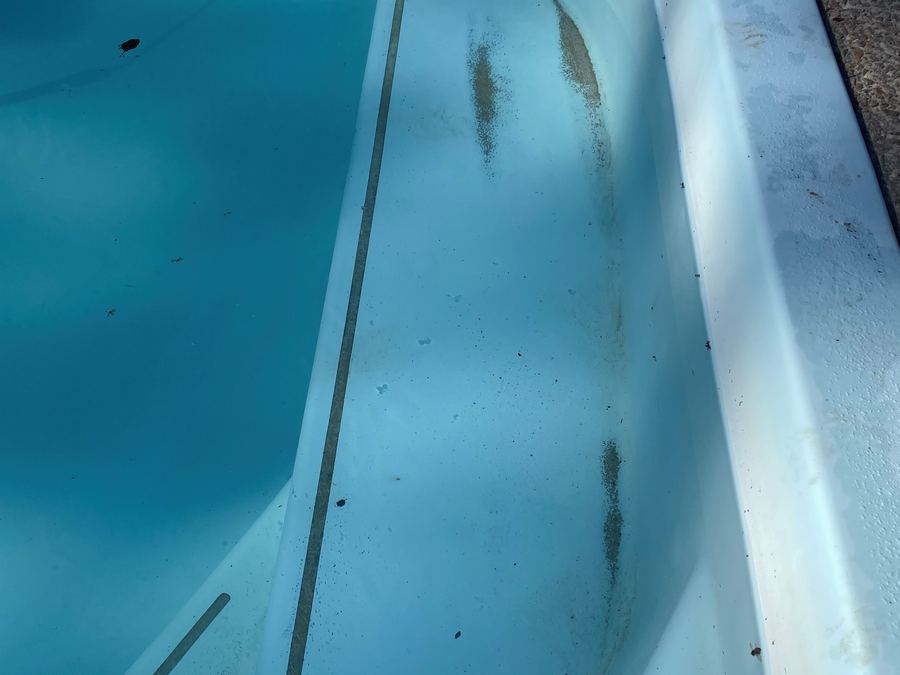 Brown patches · gelcoat worn through
Start here
How to check your pool
Most surface problems are easy to see if you know where to look. Check the floor, walls, steps and waterline in good light. If you can, look again when the water level is down or the pool is clear. Run your hand over the surface and notice how it feels on your feet.
The signs are different for each type of pool, so start by working out what you have. Fibreglass feels smooth and glossy. Concrete pools are painted, or finished in marblesheen, pebblecrete or quartz. A vinyl liner pool has a track under the coping that holds the liner in place.
Then look for the signs below. Some are about looks. Others mean water is getting into the shell of the pool, and those are the ones to act on quickly.
By pool type
The signs to look for
Fibreglass pools
Chalky or faded gelcoat. Crazing, which is fine cracking across the surface. Brown patches, where the gelcoat has worn through to bare fibreglass. Osmosis blisters. Cracks. Leaks around fittings. See fibreglass resurfacing.
Concrete and painted pools
Paint that is flaking or lifting. Black spot. Staining. A rough surface. Cracks. A pool that won't hold water. See concrete pool resurfacing.
Marblesheen pools
Lifting areas. Drummy patches that sound hollow when tapped. White calcium leaching from the surface, often called crusty runs. See marblesheen resurfacing.
Pebblecrete pools
A surface that is rough on your feet. Pebbles coming loose. Staining. Drummy areas. See pebblecrete resurfacing.
Vinyl liner pools
A liner that is stretched, creased or faded, or one that leaks. Many liner pools can be converted to fibreglass. See vinyl liner conversions.
What can't wait
Which signs are urgent, and why
The urgent problems are the ones that let water into the shell of the pool. They cost more to fix the longer they're left, because the damage spreads and there is more preparation and repair work before the pool can be resurfaced.
- Brown patches on fibreglass: the gelcoat has worn through and bare fibreglass is exposed to the water. That lets water into the laminate and brings a risk of osmosis.
- Osmosis blisters: water has already got into the laminate. Blisters need to be repaired as part of the preparation before a new surface goes on.
- Cracks: on any pool type, a crack is a path for water. On fibreglass pools we can repair cracks. On concrete pools we repair cracks as part of a full resurface, not as standalone patches.
- Leaks and a pool that won't hold water: whatever the cause, water is going where it shouldn't. We fix leaks at surface fittings, and a resurface seals the shell itself.
Signs that are less urgent
Chalking, fading, staining and a rough finish are usually about how the pool looks and feels rather than water getting in. They're still worth fixing, and they tell you the surface is ageing, but you have time to plan. On marblesheen and pebblecrete, keep an eye on drummy areas, because loose and drummy render has to be removed and re-rendered level before the pool can be resurfaced.
What to do next
You've found a problem. Now what?
1. Take photos. Get close-ups of the problem areas and one wide shot of the whole pool. Photos taken with the water clear, or with the level down, show the most.
2. Use the pool problem checker. Our pool problem checker helps you work out what the problem usually means and what to do about it.
3. Book a free inspection. We'll inspect the pool and give you a free written Pool Condition Report. It includes photos of your pool, a plain-English assessment, our recommendation and why, the full scope of works, colour options shown on real finished pools, the warranty, and a fixed written price with payment terms.
If a lower-cost option will do the job, the report says so. For example, a fibreglass pool under 5 years old and in good condition may suit our resin and gelcoat system rather than a full resurface.
If you go ahead with a full resurface, we don't strip the old surface. We clean and prepare it, carry out any crack, void and osmosis repairs, then laminate a new seamless fibreglass membrane over it and finish it in gelcoat. The old pool stays in place as the base. See how it works.
Questions
Common questions
How do I know if my pool needs resurfacing?
Look at the surface. Chalky or faded gelcoat, brown patches, blisters or cracks on fibreglass; flaking paint, black spot, staining or a rough surface on concrete; drummy or lifting areas on marblesheen; lost pebbles on pebblecrete; or a stretched, creased or leaking vinyl liner. If you're not sure, send us photos or book a free inspection.
Which pool surface problems are urgent?
Anything that lets water into the shell: brown patches on fibreglass, osmosis blisters, cracks and leaks. These cost more to fix the longer they're left, so have them looked at soon.
What do brown patches on a fibreglass pool mean?
Brown patches usually mean the gelcoat has worn through to bare fibreglass. That lets water into the laminate and brings a risk of osmosis. It's one of the signs we treat as urgent.
Can you just patch my concrete pool?
No. We don't do standalone patch repairs on concrete pools. Cracks are repaired as part of a full fibreglass resurface.
My fibreglass pool is only a few years old. Does it need a full resurface?
Not always. For fibreglass pools under 5 years old and in good condition, we offer a lower-cost resin and gelcoat system with a 3 year warranty. We'll tell you at inspection if it suits your pool.
Get it checked
Book a free inspection
We'll tell you what's going on with your pool, what it needs and what it will cost, in writing. Book online or call 03 5975 5955.