
Resurfacing options for concrete pools
If your concrete pool is flaking, stained, rough or growing black spot, you have three main choices. Here's what each one involves, and why we recommend fibreglass.
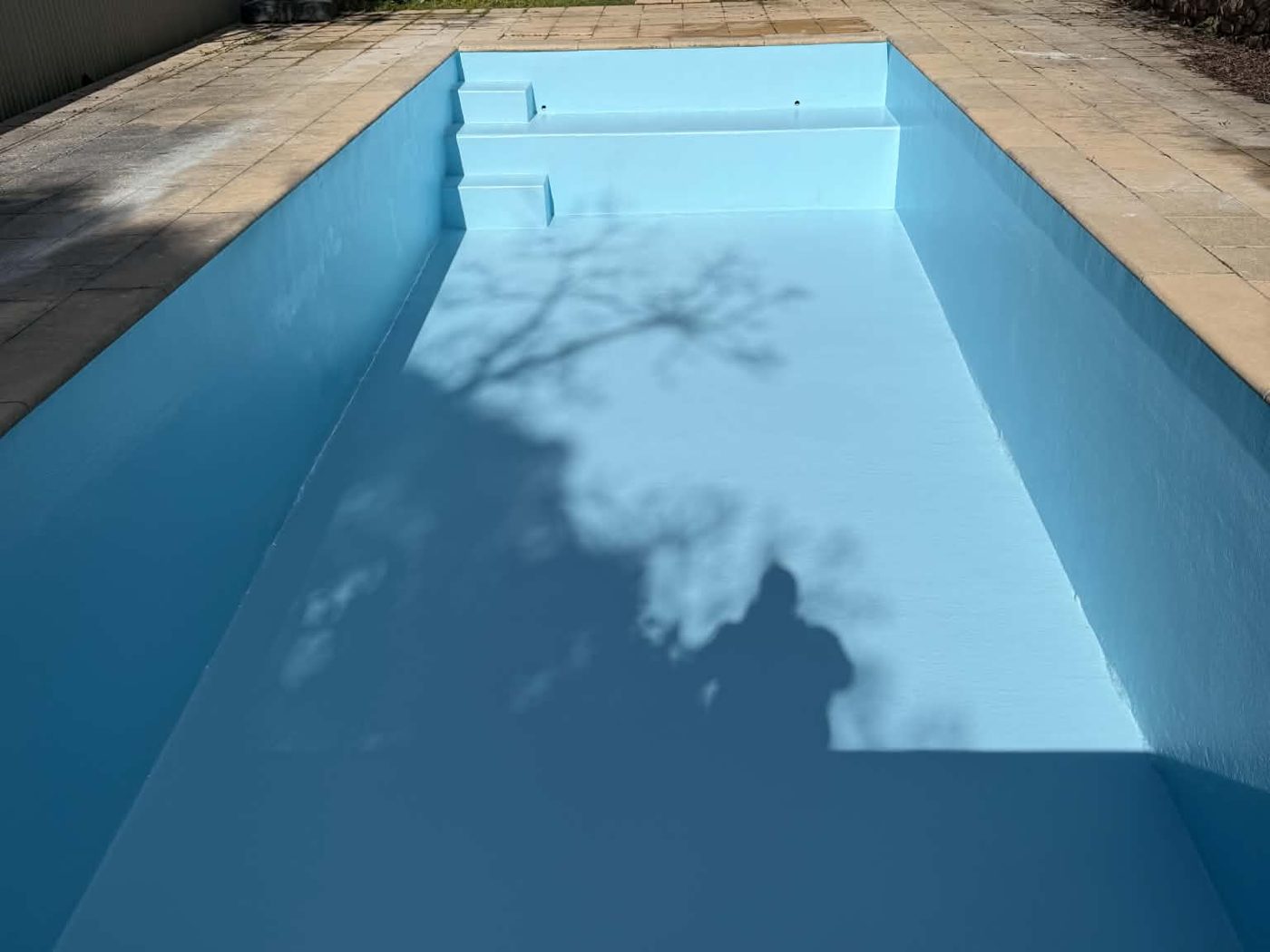 Concrete pool, Eltham · after fibreglass resurface
The choice
Three ways to resurface a concrete pool
Concrete pools are finished in paint, or in a cement-based render such as marblesheen, pebblecrete or quartz. When the finish wears out, most owners look at one of three options:
- Repaint the pool.
- Re-render it with a new coat of pebblecrete or marblesheen.
- Resurface it in fibreglass, which seals the old surface under a new fibreglass membrane and gelcoat.
Each one can suit different pools and budgets. The right answer depends on the condition of your pool, how long you plan to keep it, and how much ongoing work you're prepared to do. We only do the third option, so we'll be clear about that, and about why.
Option by option
What each option involves
Painting
The pool is drained, cleaned and prepared, then painted with a pool paint. It's a coating that sits on top of the concrete. Flaking and lifting paint is one of the most common problems we see on concrete pools, and a painted pool will need repainting again in future.
Re-pebbling or re-marblesheening
A new layer of cement-based render is applied, so the pool keeps the same type of finish. Loose and drummy render has to be dealt with first. The new finish is still a cement-based surface, and if only part of the pool is redone, the new patch won't match the weathered finish around it.
Fibreglass resurfacing
We prepare the existing surface, repair cracks and voids, then laminate a new seamless fibreglass membrane over it, followed by a base coat and a UV-stabilised gelcoat in your chosen colour. The old pool stays in place as the base. Concrete pool resurfacing.
Our recommendation
Why we recommend fibreglass for concrete pools
We've worked with fibreglass composites since the early 1960s. These are the reasons we recommend it for concrete pools.
A seamless, sealed surface
The fibreglass membrane is laid as one continuous layer across the floor, walls and steps. There are no joins for water to get through. The old concrete or render is sealed underneath it.
Smooth on your feet
The gelcoat finish is smooth to touch. If your pebblecrete is rough on your feet, or your paint is flaking off, you'll feel the difference.
No repainting cycle
Fibreglass is not a paint. Once the pool is resurfaced, you're not back to draining and repainting it every so often to keep it looking right.
Black spot has nowhere to grow
Black spot and staining live in porous surfaces. After a fibreglass resurface there is no old porous surface exposed to the water any more, which is why problems like black spot and staining stop.
No mismatched patches
Patches of new marblesheen or pebblecrete never match weathered marblesheen or pebblecrete. Fibreglass covers the whole pool in one even colour, from our range of 8 gelcoat colours. You can try them on our colour visualiser.
Cracks fixed properly
We don't do standalone patch repairs on concrete pools. Cracks are repaired during preparation, then covered by the new membrane as part of the full resurface.
The process
What a fibreglass resurface of a concrete pool involves
We don't remove or strip the old surface. We drain the pool, brace it if required, tarp the area, clean it, and prepare the surface by mechanical abrasion. Cracks, voids and any loose or drummy render are repaired. We then laminate a new seamless fibreglass membrane in vinylester resin, apply a vinylester base coat, and finish with a UV-stabilised gelcoat top coat in your chosen colour.
Most residential pools take about a week on site, weather permitting. You usually don't need to be home. We need access to the pool area, power and water. If groundwater comes up while the pool is empty, we deal with it as part of the job and explain any possible extra cost at inspection.
A full fibreglass resurface comes with a 5 year written warranty on workmanship and materials. See every step of the process, or browse finished pools in our work.
Questions
Common questions
Can you put fibreglass over a concrete pool?
Yes. We don't strip the old surface. We clean and prepare it, repair cracks and voids, then laminate a new seamless fibreglass membrane over it and finish it in gelcoat. The new membrane bonds to the prepared surface and forms a new internal shell.
Can you resurface over marblesheen or pebblecrete?
Yes. Sound render stays as the base. Loose and drummy areas are removed and re-rendered level first, then the pool is fibreglassed.
Will black spot come back after a fibreglass resurface?
Black spot and staining stop after a fibreglass resurface because there is no old porous surface exposed any more. Note that our warranty doesn't cover black spot appearing or returning.
Can you just patch my marblesheen or pebblecrete?
We don't do standalone patch repairs on concrete pools. Patches of new marblesheen or pebblecrete also never match the weathered finish around them. Cracks are repaired as part of a full resurface.
Do you paint pools or re-render them?
No. We're fibreglass specialists. We resurface concrete pools in fibreglass and finish them in one of 8 gelcoat colours.
Next step
Find out what your concrete pool needs
Book a free inspection and get a free written Pool Condition Report with a fixed written price. Or call us on 03 5975 5955.